
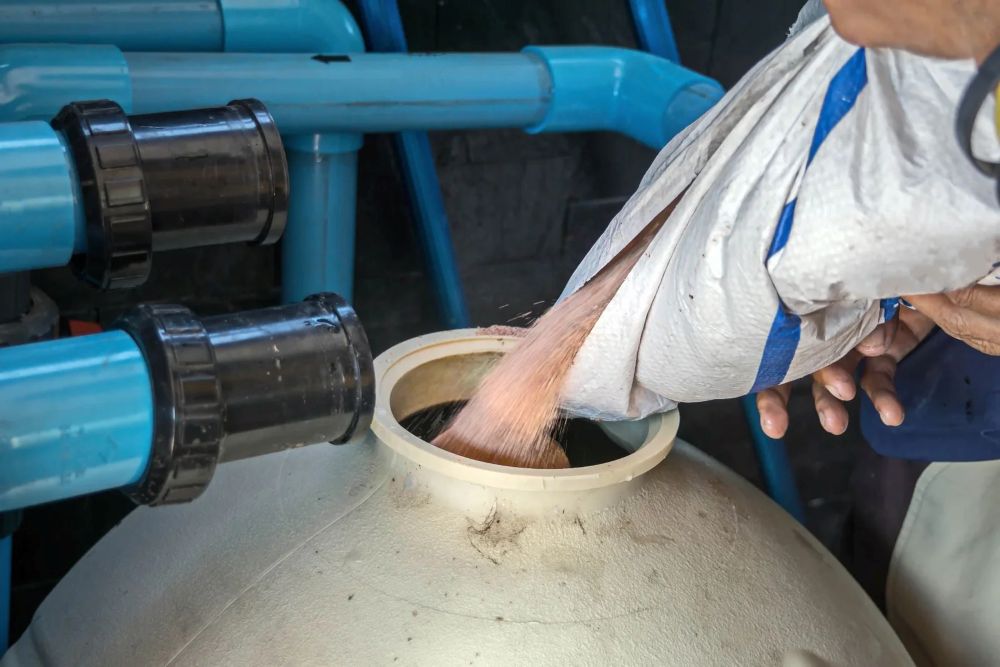
Pool filter sand doesn’t last forever and needs to be replaced every 3-5 years for optimal performance. Knowing when and how to change your sand keeps your pool water crystal clear all season. Dependable swimming pool contractors recommend monitoring your filter’s pressure gauge and water clarity as key indicators. This guide walks you through the signs that signal it’s time for replacement and the step-by-step process to get it done right. From gathering materials to testing the system, you’ll have everything you need to tackle this maintenance task.
Signs Your Sand Filter Needs Replacement
Keep an eye on your filter’s pressure gauge to catch early warning signs. A noticeable increase in pressure often means the sand is clogged and losing effectiveness. Cloudy water that won’t clear up even after running the filter for hours is another red flag. If you notice debris bypassing the filter and floating back into your pool, the sand can no longer trap particles properly. Sand that’s been in use for more than 5 years also loses its rough edges, reducing its filtering ability. Regular monitoring of these signs helps you stay ahead of problems and keeps your pool in top shape.
Materials Needed for Sand Change
Gather all your supplies before starting the job to make the process smoother. You’ll need new pool filter sand designed specifically for pool filters; regular sand won’t work. A screwdriver or wrench helps you open the filter tank, depending on your model. Keep a garden hose nearby for rinsing out old sand and cleaning the tank interior. A large bucket or tarp catches the old sand for easy disposal. Make sure your screwdriver fits the screws on your specific filter, and attach a spray nozzle to your hose for better control. Having everything ready saves time and prevents frustrating mid-project trips to the hardware store.
Draining and Disassembling the Filter
Safety comes first; turn off the pool pump and disconnect it from the power source. Locate the filter’s drain valve and attach a garden hose to direct water away from the pool area. Open the valve and let the water drain completely before moving forward. Once empty, remove the pressure gauge, air relief valve, and any other external attachments. Carefully unscrew the tank’s clamp band and separate the two halves of the tank. Handle all internal components gently to avoid cracking or breaking parts during disassembly.
Removing Old Sand and Cleaning
Follow these steps to remove the old sand and prepare the tank for fresh media:
- Disconnect Power: Double-check that the pump is off and unplugged before reaching into the filter.
- Empty the Tank: Remove the lid, then scoop the old sand into a bucket or onto a tarp for disposal.
- Inspect and Clean Internals: Check the laterals and hub assembly for cracks or damage, then thoroughly clean them.
- Rinse the Tank: Spray down the inside of the filter tank with a garden hose until all remaining sand particles wash away.
Adding New Sand and Reassembly
Pour the correct amount of new pool filter sand into the tank while keeping the standpipe centered. Tap the sides of the tank gently to level the sand bed evenly. Reattach the laterals and secure them tightly so sand doesn’t sneak into your pool later. Place the top diffuser and valve assembly back onto the tank, then press down to create a tight seal. Tighten the clamp band firmly to securely hold all components together.
Testing and Restarting the System
Complete these steps to confirm everything works properly:
- Turn on the pool pump and set it to filter mode.
- Check around the filter and pump for any leaks.
- Watch the pressure gauge to confirm it reaches the normal operating range.
- Observe the water returning to the pool to make sure the flow is steady and strong.
Once everything checks out, your refreshed filter is ready to keep your pool sparkling clean.
Related Topics: