Pool stabilizer plays a big role in keeping your chlorine effective and your water safe. Without it, sunlight breaks down chlorine fast, leaving your pool vulnerable to bacteria and algae. Florida’s fiberglass pool experts know that getting the stabilizer levels right takes some know-how and the correct approach. This post walks you through testing, measuring, and adding stabilizer the right way. By the end, you’ll have a clear process for keeping your pool chemistry balanced all season long.
Importance of Pool Stabilizer
Stabilizer, also called cyanuric acid, protects chlorine from breaking down in sunlight. It forms a shield around chlorine molecules, keeping them active longer and killing bacteria and algae even on the brightest days. Without a stabilizer, chlorine dissipates quickly, and you end up adding more just to keep up. The goal is to keep stabilizer levels between 30 and 50 ppm; too little, and your chlorine won’t last; too much, and your chlorine becomes less effective. Test your levels regularly and adjust when needed to keep the water safe and clean for swimming.
Testing Pool Stabilizer Levels
Testing stabilizer levels should be done at least once a month, especially during summer when the sun is at its strongest. Grab a pool water-testing kit that includes a cyanuric acid test to get an accurate reading. The sweet spot for stabilizer sits between 30 and 50 parts per million. If your levels drop below that range, chlorine won’t stick around long enough to do its job. By keeping tabs on the stabilizer and making adjustments when needed, you keep your pool properly sanitized and ready for swimmers.
Calculating Stabilizer Quantity Needed
Before adding anything, you need to know how much stabilizer your pool actually needs. Start by testing the water to find your current stabilizer level. Then factor in your pool’s water volume. Here’s the formula: Stabilizer Needed (in ounces) = (Pool Gallons x Desired Stabilizer Increase) / Stabilizer Product’s Dosage Rate. For example, if you have a 20,000-gallon pool and want to raise the stabilizer by 20 ppm using a product with a dosage rate of 8 ounces per 10,000 gallons, you’d calculate (20,000 x 20) / 10,000 = 40 ounces of stabilizer.
Preparing Stabilizer Solution
Start by measuring out the right amount of stabilizer powder using a digital scale and following the manufacturer’s guidelines. Fill a clean bucket with warm water enough to fully dissolve the powder. Add the measured stabilizer slowly while stirring continuously. Keep stirring until everything dissolves completely, since undissolved particles can settle in the pool and cause problems. Once the powder is fully mixed in, the solution is ready to go into your pool.
Adding Stabilizer to Pool Water
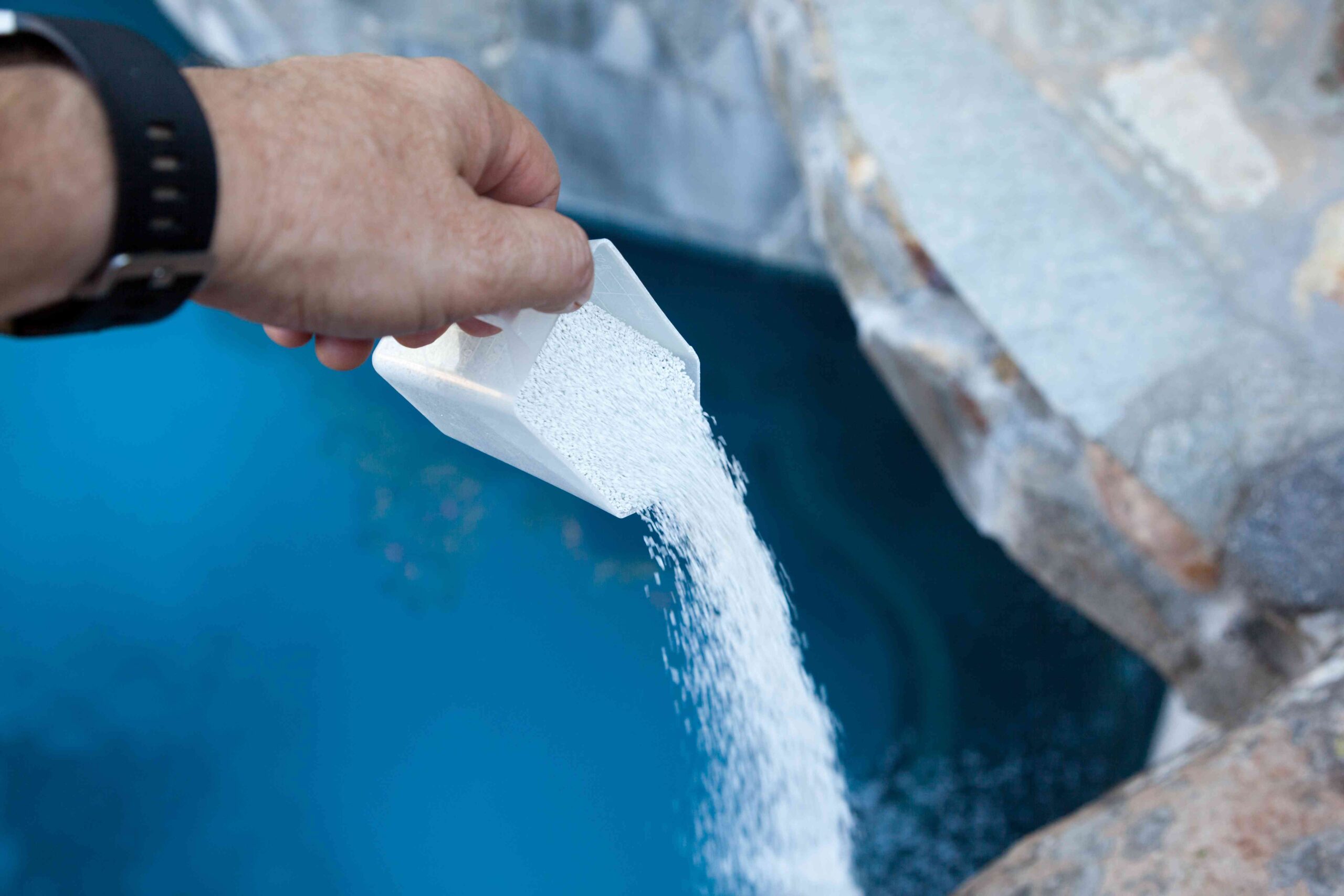
Make sure your pool filter is running before you start. Based on your pool size and current levels, figure out exactly how much stabilizer you need. Measure the granules or liquid using a scale or measuring cup for accuracy. Pour the stabilizer slowly into the skimmer, or dissolve it in a bucket first and then spread it evenly across the pool surface. Brush the pool walls and floor to help everything distribute. Let the stabilizer circulate for a full 24 hours before testing the water again. Stick to the manufacturer’s instructions and take safety precautions throughout.
Monitoring Stabilizer Levels
Keeping an eye on stabilizer levels is the only way to know if your pool chemistry stays balanced. Use a test kit made specifically to measure cyanuric acid concentration. Your target range is 30-50 ppm for solid protection against UV breakdown of chlorine. Check levels regularly, and pay extra attention after heavy rain or whenever you add fresh water to the pool, since both can dilute your stabilizer. Stay on top of testing and make adjustments as needed to keep your stabilizer working properly and your pool safe for everyone.
Related Topics: