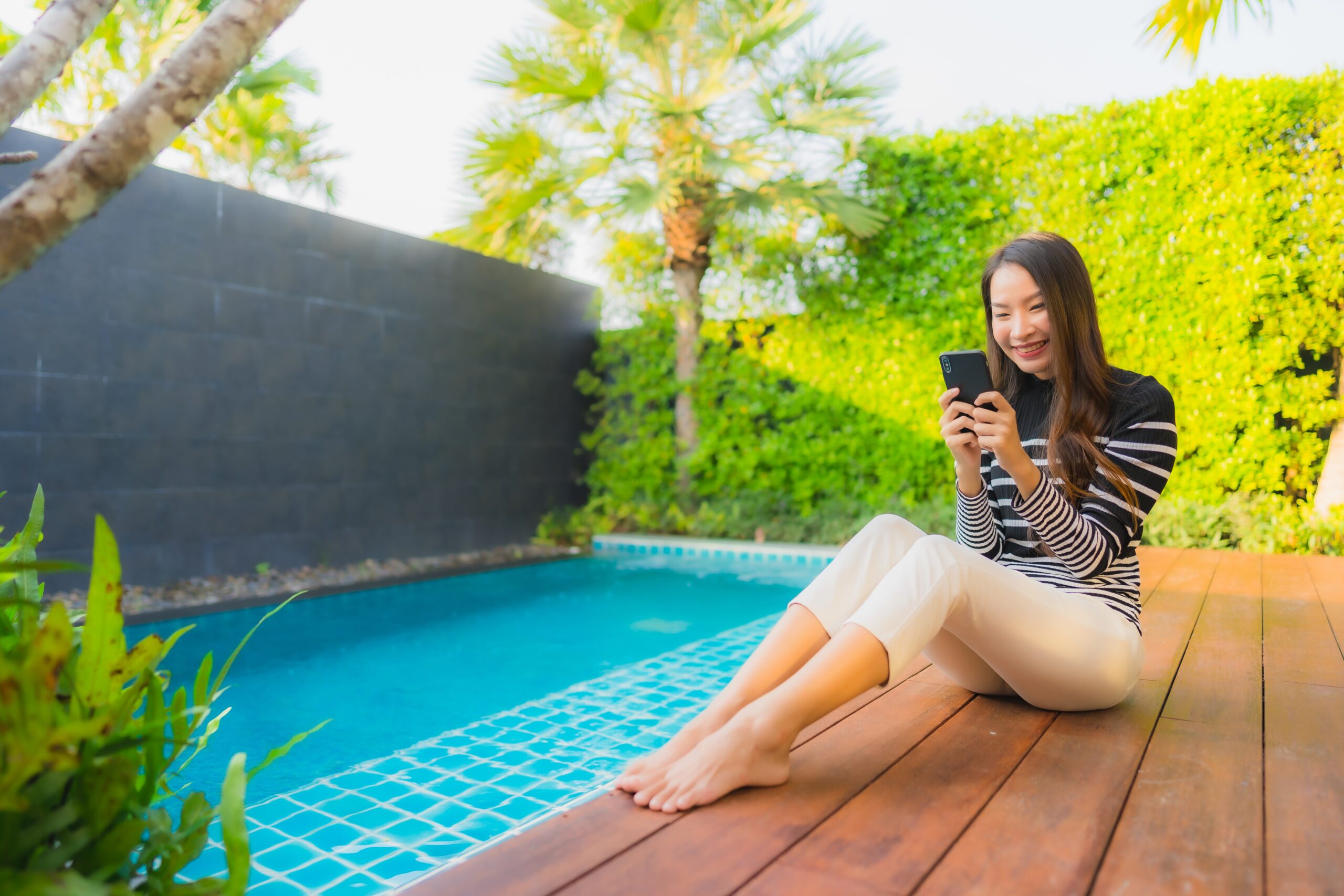
When homeowners start planning for premium fiberglass pools in Florida, the pool itself usually takes center stage, but the decking around it plays just as big a role in how your backyard feels and functions every day. In New Port Richey, where bare feet meet hot sun for most of the year, the deck material you pick affects how warm it gets underfoot, how safe it stays when wet, how well it holds up in Florida’s climate, and how much upkeep it needs over time.
Here is a straightforward look at the most common pool decking options for New Port Richey homes, what each one offers in Florida’s climate, and how to weigh the decision before you lock in your final plans.
Why Pool Decking Deserves More Thought Than It Usually Gets
Most homeowners make their decking decision toward the end of the pool planning process, often with less time and attention than the decision deserves. By that point, focus has shifted to pool features, model selection, and the bottom line of the overall quote. Decking becomes an afterthought.
That is a mistake that tends to surface later. The deck is the surface your family walks on barefoot every time they use the pool. It is what your kids run across, wet, in direct afternoon sun. It is the surface that either stays cool and comfortable in July or becomes something you hurry across to reach the water. Choosing the right material for New Port Richey’s climate, your usage patterns, and your budget is worth making deliberately rather than defaulting to whatever the builder suggests last.
Concrete Pavers: The Most Popular Choice in New Port Richey
Paver decking is the most requested material among New Port Richey homeowners, and it is what we install as part of our complete pool projects. The reasons for its popularity are as practical as they are aesthetic.
Pavers come in a wide range of materials, colors, and patterns, which means the finished look can be tailored to complement the home’s exterior and the homeowner’s preferences. They are durable, they handle Florida’s conditions better than poured concrete, and they are relatively straightforward to repair if a section is damaged. Because pavers sit individually rather than as a continuous poured surface, ground movement does not cause the same cracking issues that affect poured concrete in Florida’s shifting sandy soil. A damaged paver can be replaced individually without disturbing the rest of the deck.
The primary limitation of standard concrete pavers in Florida’s climate is heat retention. Concrete pavers absorb and hold heat from direct sun, which can make walking barefoot uncomfortable during the middle of a July afternoon. Lighter colors and textured surfaces help. Paver decking does require some periodic maintenance: the sand filling the joints between pavers can wash out over time and needs to be replenished, and occasional cleaning removes algae or mildew that can accumulate in humid conditions.
Travertine: Premium Performance in Florida’s Heat
Travertine is a natural stone material that has become one of the most sought-after pool deck surfaces in Florida, and its popularity in warm climates comes down to one property: it stays noticeably cooler in direct sun than concrete or standard pavers.
Travertine is porous, which means it does not absorb and radiate heat the way denser materials do. The surface stays comfortable to walk on barefoot even on the hottest New Port Richey afternoons, making it a highly practical choice for decks that get full sun exposure for most of the day. This is not a minor comfort difference in a Florida summer. It is the reason so many homeowners with south or west-facing pool areas specifically request travertine.
The aesthetic of travertine is also distinct. It has a natural variation in color and texture that most homeowners find more visually appealing than manufactured paver options. A travertine pool deck adds perceived value to the property and tends to photograph well. The tradeoffs are cost and some additional care. Travertine is more expensive than standard concrete pavers, and periodic sealing is recommended to prevent staining from pool chemicals or organic debris.
Stamped Concrete: Flexible Look, Higher Maintenance Burden
Stamped concrete is poured concrete that has been textured and colored to resemble stone, brick, or paver patterns. It can mimic the look of more expensive materials at a lower upfront cost, which makes it an appealing option for budget-conscious homeowners.
The practical limitation of stamped concrete in New Port Richey is how it holds up over time. Florida’s sandy, shifting soil puts stress on any poured surface. Stamped concrete is more prone to cracking than pavers because it is a single continuous surface rather than individual units. When a section cracks, repair is more visible and more involved than replacing one paver.
Stamped concrete also needs periodic sealing to maintain its appearance and prevent the surface from becoming slippery when wet. Florida’s rain and sun exposure degrade sealants faster than in cooler, drier climates. For homeowners who prefer lower long-term maintenance, pavers or travertine are more practical in Florida’s conditions.
Brushed Concrete: Practical and Budget-Friendly
Plain brushed or broom-finished concrete is the most straightforward and lowest-cost pool deck surface. It is widely used across Florida and is a reasonable choice for homeowners focused primarily on keeping total project costs down.
The practical limitations in New Port Richey are similar to those of stamped concrete. Poured concrete is vulnerable to cracking in shifting soil and heats up significantly in direct sun. Over time, the surface can stain from pool chemicals and organic debris, and acid washing is required to restore its appearance. On the positive side, brushed concrete is easy to clean, requires no joint maintenance, and has the lowest upfront cost of any option on this list.
What to Consider Before Making Your Choice
A few questions worth thinking through before finalizing your decking selection help clarify which material is genuinely the best fit for your property and how you use it.
How much direct sun does your deck area get? If the deck is in full sun through most of the afternoon, heat retention becomes a genuine comfort issue for barefoot use. Travertine performs best in this scenario, with lighter concrete pavers as a reasonable alternative. How important is low ongoing maintenance to you? Pavers need periodic joint re-sanding. Travertine benefits from sealing every few years. Poured concrete needs sealing and is more susceptible to cracking over time.
What does the rest of the property look like? The decking material should complement the home’s exterior and landscaping. What is your long-term budget? Travertine costs more upfront but tends to require less corrective maintenance than concrete. Pavers offer a middle ground on both fronts. Deciding based on total cost over 10 years often points to a different answer than deciding on upfront cost alone.
How We Handle Paver Deck Installation
We install paver decking as part of our complete pool projects in New Port Richey and across Pasco, Hillsborough, Pinellas, and Hernando counties. Decking is included in the same project scope as the pool itself, which means one contractor, one timeline, and one point of contact throughout the build. You do not have to coordinate separately with a decking contractor while we are finishing the pool.
During the free in-home consultation, we walk through the decking options that make sense for your yard, your budget, and how you plan to use the space. We measure the area, discuss what works with the existing landscape, and give you a clear picture of the finished project before any work begins. We have built more than 60,000 pools in Florida over 30-plus years, and paver decks are a consistent part of what we deliver for homeowners throughout the region.
Related Topics: